 UNITED Static Control Products < Back | Live Chat | Telephone 719 676 3928 Conductive Flooring PROTECTS Robots and STOPS ESD GlitchesA study in turning standard floor tiles into ESD conductive floors for robotics thus eliminating problems caused by Electrostatic Discharge
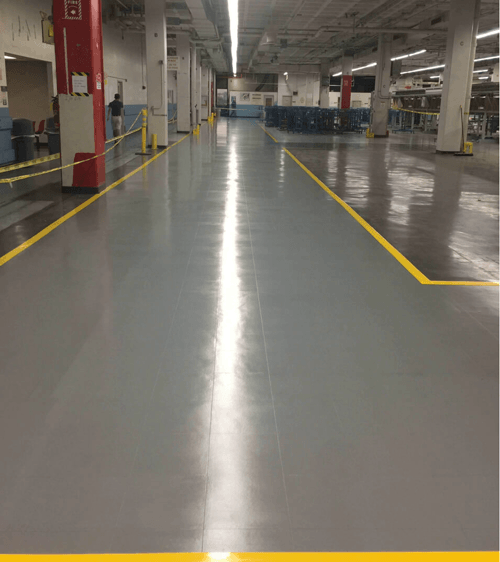
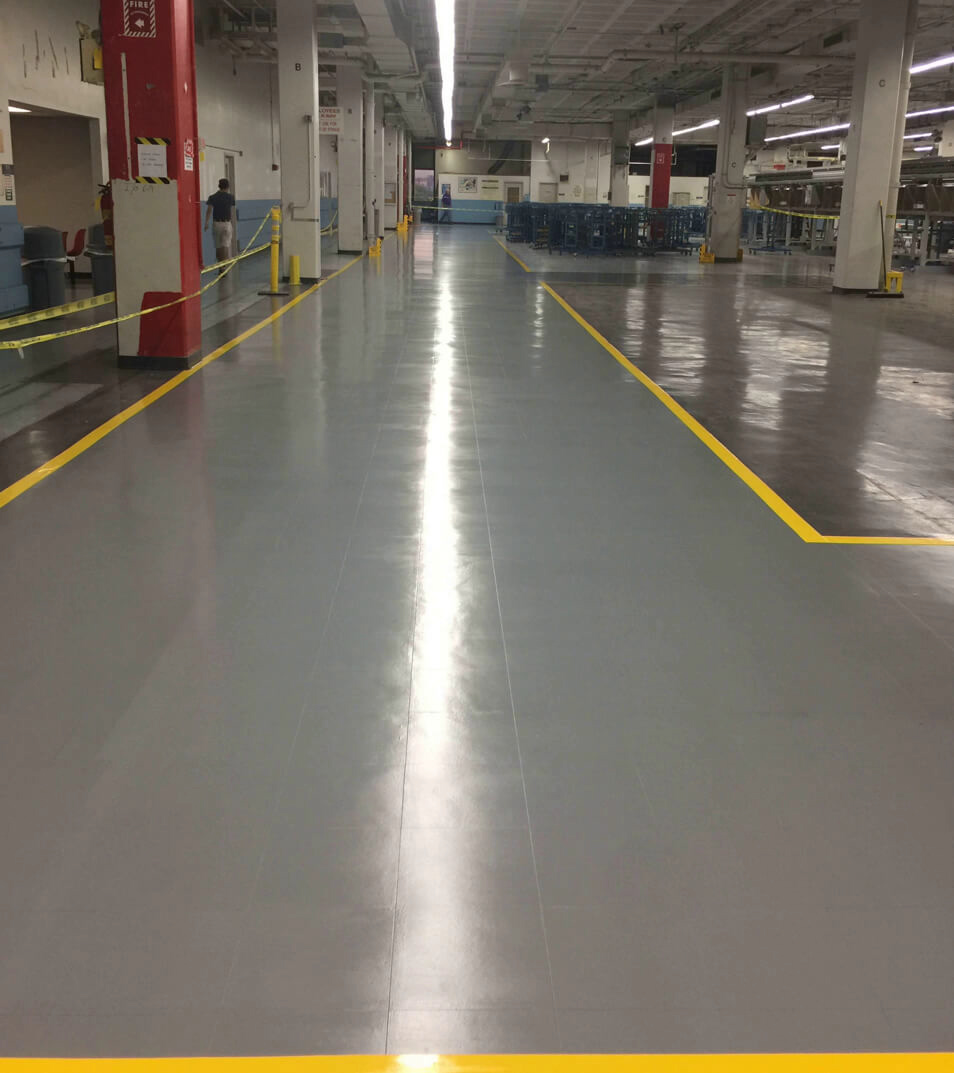
Automated Guided Vehicles and other rolling robotics rely on a vast array of ESD sensitive electronics to perform their complicated functions. As they roll on standard (non ESD) flooring the contact and separation of the wheels on the electrically insulative floor may generate intense amounts of static. With no place to discharge, the uncontrolled release of energy to an item of lower static voltage (a person for example) is fast, powerful and inevitable. These discharges manifest themselves by compromising controllers, sensitive micro circuitry and even the navigational frequencies used to perform vehicle guidance. At the main USPS distribution center for the east coast massive automated Guided Vehicles (autonomous AGV Robots) are used to move mail between stations. They were generating over 28,000 volts of static, causing painful discharges to people that came into contact with the robots. The static discharges were so intense and abrupt they caused damage to the sensitive controllers and microcircuits used in each robot. The solution? Coat the non conductive standard floor tiles with ElectraGuard ESD Epoxy floor paint and equip each robot with a conductive vinyl drag strap from UnitedSCP. ElectraGuard over standard floor tiles easily handled the weight of the robots and provided an electrically conductive surface that allowed the static charge to safely dissipate to ground. Static voltages were reduced from 28,000 to a mere 587 volts (well below the threshold of human perception). ADDITIONAL INFORMATION Static electricity can impact some robots at a voltages as low as 200 (v). While humans generally only feel a static shock starting at around 3,000 volts robots are vulnerable at much lower levels of electrostatic discharge (ESD).
Key Mitigation Strategies: Grounding: Ensuring all electronic components are properly grounded to the robot frame and the frame makes contact with the conductive floor using conductive vinyl drag straps from UnitedSCP. ESD Flooring: Use CONDUCTIVE (<1.0E06 resistance to ground) flooring to dissipate static from mobile robots (AMRs/AGVs). Humidity Control: Maintaining a humidity level above 60% can help reduce static build-up. Contact United Static Control Products Tame the Static Beast Before it Takes another Byte! © All rights Reserved 09/22/2026
* |