 UNITED Static Control Products Contact Us | Live Chat | Telephone 719 676 3928 | Search |
ELECTRAGUARD ESD EPOXY WEAR RESISTANCEMission Critical Conductive Floor Paint Wear StudyClick Here for the ElectraGuard Main Page
Quantum Storage Devices of Colorado Springs, CO began an evaluation of various esd flooring options in 2004 as a replacement for their static dissipative esd rubber flooring that was failing due to vapor emissions from the concrete. In addition to a higher electrical conductivity, Quantum's needs dictated a flooring material that was economical, easy to clean and could handle rolling loads without mechanical failure (the original esd flooring was static dissipative esd rubber and failed in this respect).
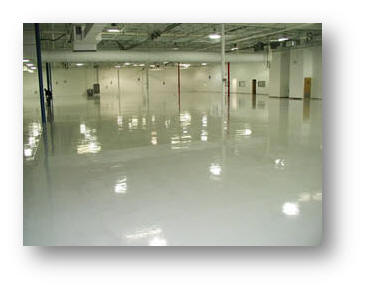
Their choice: ElectraGuard Epoxy ESD Floor Paint (3 coats) top coated with two thin coats of ElectraThane / ElectraSeal followed by one thin coat of ElectraGlaze sacrificial esd floor Finish. Prior to using the system in the entire 172,000 sf area the product's were thoroughly evaluated for wear using the following study. The following data documents long term wear performance of The ElectraGuard Tri-Layer System.
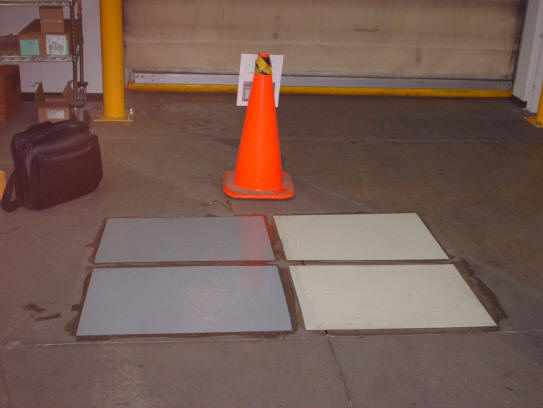
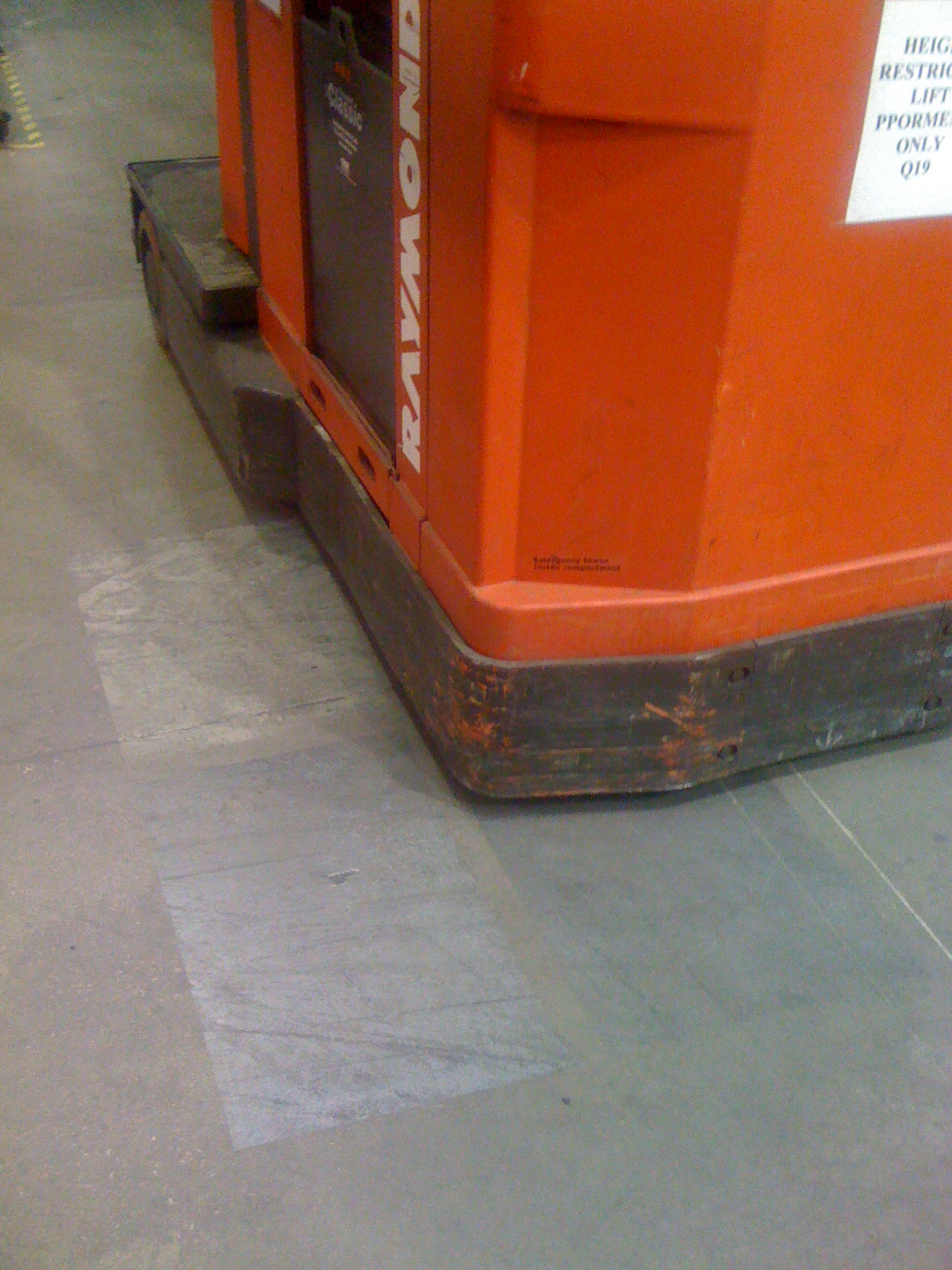
Testing location Forklift Warehouse Portal. Typical traffic: Fully loaded Industrial Fork Lifts. Estimated weight of fork lifts (fully loaded) 2,300 pounds Estimated trips over test area per day: 237
NOTE: Click icons to expand photos. Use the back button on your browser to return to this page.
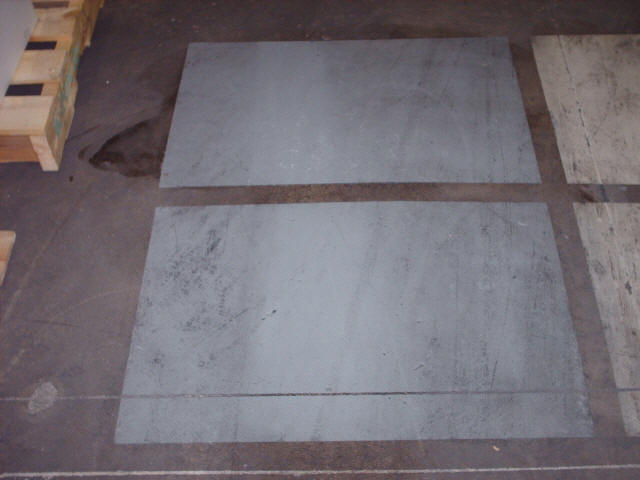
09/12/04. Preparation of the concrete slab was intentionally kept to a minimum. The oil and grease from the heavy forklift traffic was removed via a light damp mopping of the concrete with ElectraClean esd floor cleaner diluted with water. The dirty solution was mopped up with dry paper towels and the concrete substrate was allowed to dry 2 hours prior to application of the ElectraGuard ESD floor Paint. Masking tape was applied to the substrate. The ElectraGuard base was catalyzed, mixed and applied in 3 thin coats to the concrete substrate allowing approximately 3 hours between coats. The following day, United SCP applied two thin coat of ElectraThane / ElectraSeal followed by 1 thin coat of ElectraGlaze sacrificial esd floor finish with (30 minutes of drying time were allowed between each coat). Electrical testing was performed utilizing ANSI ESD S 7.1 parameters with results as follows: Resistance to Ground 5.31E05, Resistance point to point; 6.38E05 @ 23% rH and 68.7 deg F.
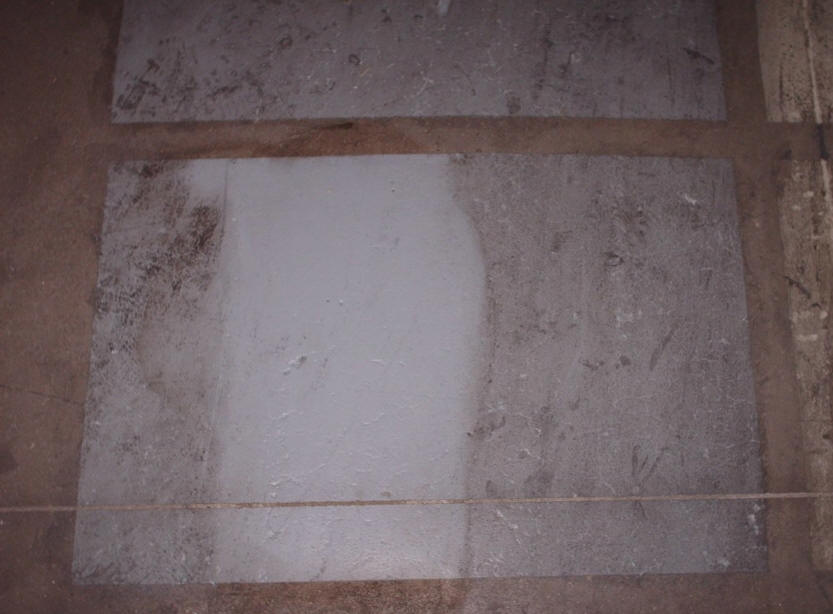
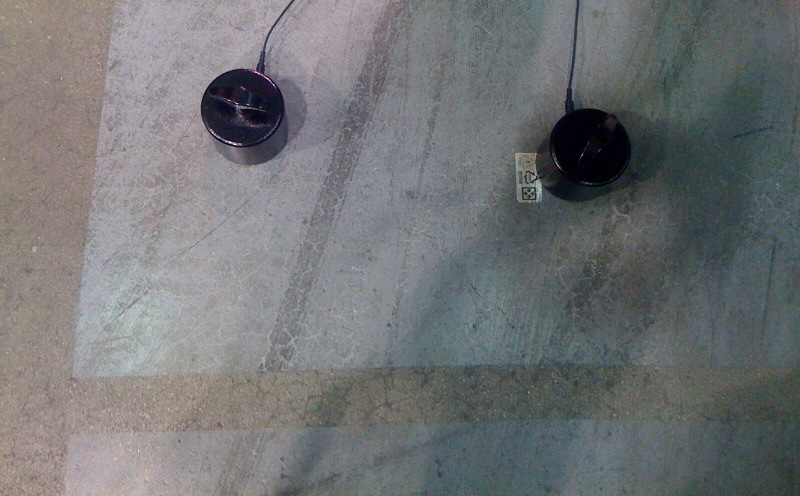
10/14/09. The ElectraThane / ElectraSeal sealers are totally worn from the epoxy. The panels are still well bonded and are showing very limited wear of the ElectraGuard epoxy floor paint coating. The point to point conductivity (in this extremely dirty condition) measures <5.59E06 on average. The esd epoxy paint is showing no signs of flaking, breaking or de-lamination. The ElectraGuard has now acquired a shiny patina type look from the wear. Two 2 small sections of the concrete have now broken free due to concrete spalling. It is important to note that (other than an occasional sweeping) this section of the substrate receives no floor care maintenance and is not routinely auto scrubbed. Standard floor maintenance procedures (such as a routine auto scrubbing) will surely lengthen the life span of the sealers and floor paint.
UPDATE 01/03/11: Due to Quantum receiving T. S. A. Security Clearance for finished product, photos of this area are no longer allowed.
UPDATE 03/15/16: As of March 15th 2016 said test panels are still intact, well bonded and are providing an electrical resistance of <3.5E07. The manufacturing operations for this portion of Quantum moved overseas about 1.5 years ago. The ElectraGuard flooring throughout the entire facility has held up well and is still in use today by various clients that lease portions of the original facility.
reviewed for accuracy 10/16/2021, Tech Services * |
|||||||
.jpg)